For product recommendations, see the best products for interior car cleaning. Did you know that the interior accounts for up to 80% of the perceived value of any vehicle? In 2026, with modern cars packed with large touchscreens, sustainable fabrics, and advanced electronics, a dirty interior doesn’t just look bad — it can reduce resale value by thousands and affect your health.
If you’re searching for how to clean car interior like a professional, you’re in the right place. This ultimate 2026 guide shows you the exact methods professional detailers use across the USA and Canada to achieve deep-clean results in your own garage — without spending $300+ at a shop.
You’ll discover:
By the end of this guide, you’ll know how to detail car interior like a pro and keep it looking (and smelling) brand new for months. Ready to transform your car? Let’s dive in.
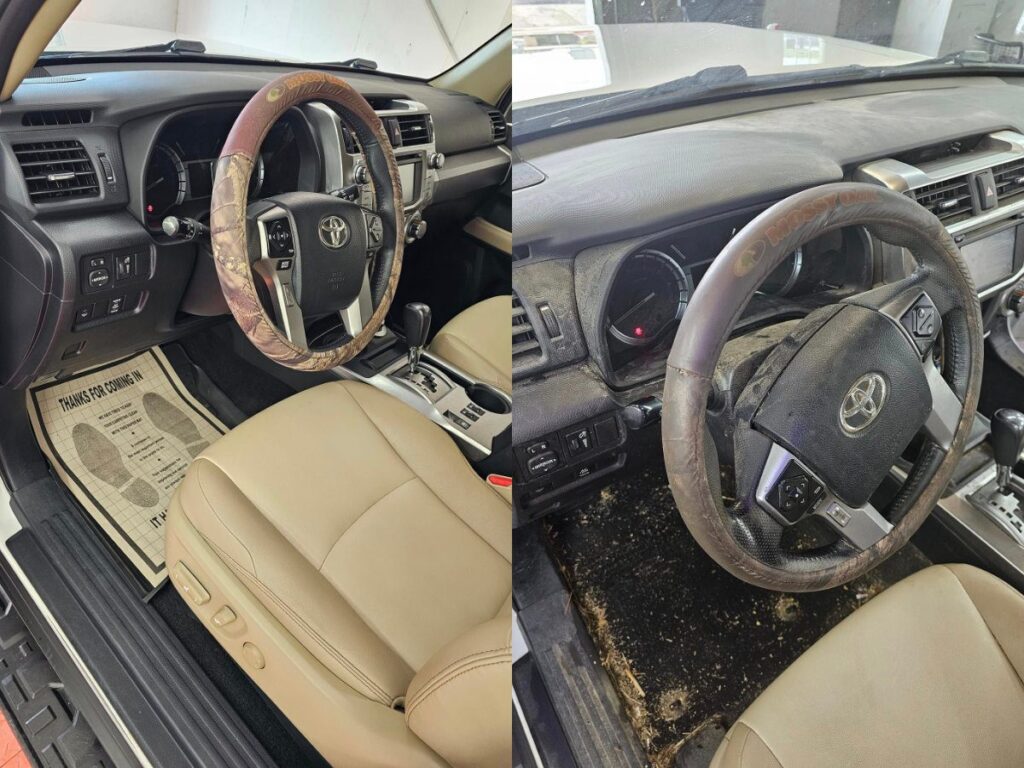
Quick win: Grab our Professional Interior Detailing Kit (currently 15% off for blog readers) and follow along — everything you need is in one box.
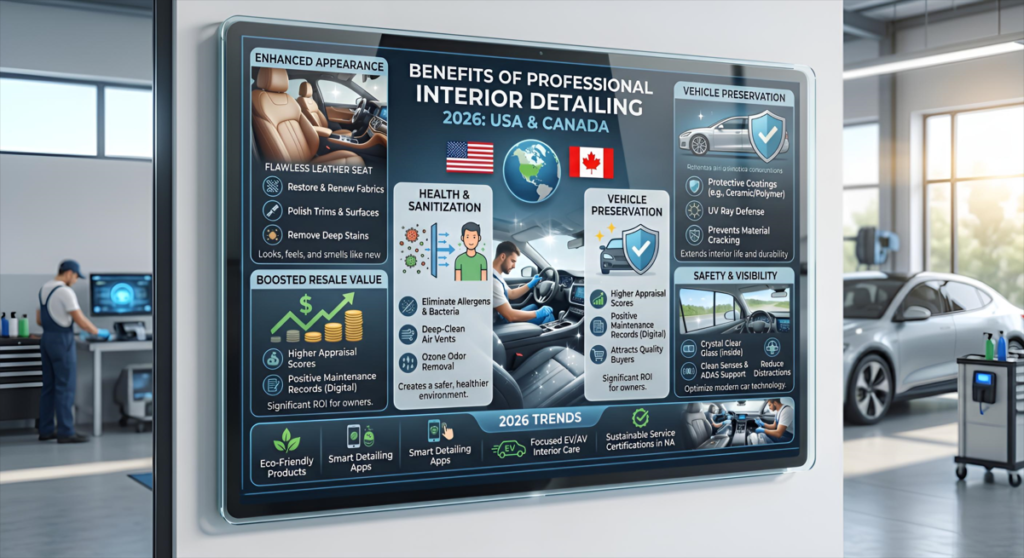
Professional car interior cleaning goes far beyond vacuuming. In 2026, vehicle cabins are more complex than ever: large glass cockpits, antimicrobial-treated fabrics, and sensitive electronics demand proper care — especially in the diverse climates of the USA and Canada.
Here’s why it pays to go pro:
The North American car detailing market continues to grow rapidly because owners now understand: regular professional maintenance isn’t a luxury — it’s smart ownership.
You don’t need a $5,000 setup. Here’s exactly what professional detailers use in 2026 across the USA and Canada:
| Level | Must-Have Tools & Products | Best For | Approx. Cost |
| Beginner | Microfiber towels, basic vacuum, all-purpose interior cleaner | Quick refreshes | $40–60 |
| Intermediate | Detailing brushes, leather conditioner, steam cleaner | Monthly deep cleans | $120–180 |
| Professional | Dual-action extractor, dedicated plastic/vinyl cleaner, APC, odor eliminator | Results that last 6+ months | $250–350 |

Recommended 2026 products:
Don’t want to buy everything separately? → Shop the Complete Professional Interior Detailing Kit – Everything above included + 15% off for readers. Ships fast across USA and Canada.
Follow this exact 8-step sequence. Work top-to-bottom and dry-to-wet to avoid re-contamination. Total time: 2–4 hours depending on vehicle size. You can also explore more car cleaning kits and tools in our full collection.
Remove all personal items, trash, floor mats, and child seats. Open all doors and let the car air out for 10 minutes.
Time: 10–15 min. Pro tip for USA/Canada: In winter (especially Canada and northern US states), warm the car slightly first to loosen road salt and debris.
First pass: Crevice tool on all seams, under seats, and floor. Second pass: Upholstery brush + HEPA vacuum for fabrics.
Time: 20–30 min. 2026 update: Use a cordless extractor-vacuum combo for best results on new carpeted vehicles common in North America. If you are dealing with heavy shedding, learn how to remove pet hair from Ford F-150 seats effectively using specialized rubber brushes.
Spray APC on microfiber (never directly on surfaces). Wipe in straight lines. Use soft brushes for vents.
Time: 15–20 min. Note: To Clean Dashboard Without Streaks in 2026 – Avoid silicone sprays; they attract dust faster on new matte finishes used in 2026 models. If you own an EV with sensitive components, you can also check our guide on how to remove scratches from a Tesla Model 3 center console safely.
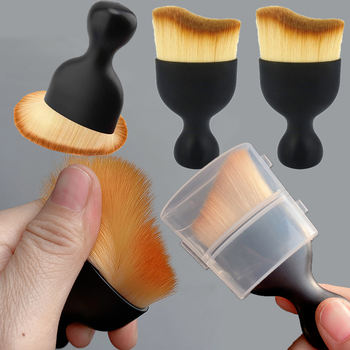
Use detailing brushes + compressed air. Finish with APC on microfiber.
Time: 10–15 min. Note: Flexible vent brushes are game-changers for dust and pollen common across North America.
Use ammonia-free glass cleaner + microfiber. Clean from top down.
Time: 10 min. 2026 note: New anti-glare coatings on windshields and screens require streak-free formulas.
Apply UV protectant on plastics/vinyl and leather conditioner.
Time: 15 min. This step is what separates “clean” from “professional” and protects against intense sun in the southern USA or freezing temperatures in Canada.
Use enzyme-based odor eliminator (not air freshener). Let it dwell 10–15 minutes, then vacuum/extract.
Time: 15–20 min. Note: How to Remove Smoke, Pet & Food Odors Like a Pro.
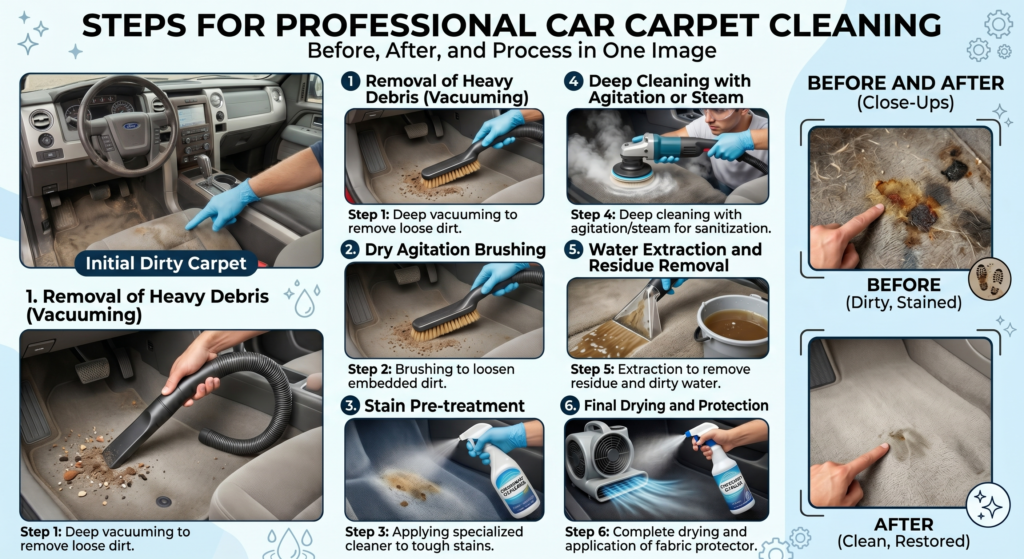
Vehicle maintenance requirements vary significantly across the USA and Canada. For instance, drivers in sun-drenched cities like Los Angeles, Miami, or Dallas must prioritize UV-resistant protectants to prevent dashboard cracking. Conversely, car owners in Toronto, Chicago, or Vancouver require specialized cleaners to neutralize road salt and prevent carpet corrosion during harsh winters. Whether you are navigating the humidity of the Southeast or the dry heat of the Southwest, a complete car cleaning kit provides the professional-grade formulas needed for all North American climates.
You now have the complete professional blueprint for how to clean car interior like a professional. Follow this guide once and you’ll immediately see (and smell) the difference — whether you drive in the USA or Canada.
Ready for effortless, long-lasting results? → Get the Professional Interior Detailing Kit Now – 15% Off for Readers
Share your before/after photos with us on social media and tag your location — we feature the best ones every month! If you want a broader checklist, review what should a complete car cleaning kit include.
Q: How often should I deep clean my car interior?
A: Every 3–6 months for best results in North American conditions.
Q: Is it safe to clean leather seats at home?
A: Yes, with the right pH-neutral products and synthetic conditioner.
Q: Does this method work for 2026 models in the USA and Canada?
A: Absolutely — every step is updated for modern materials and regional climates.
Q: What is the best thing to clean a car interior with?
A: A high-quality all-purpose cleaner (APC) designed for automotive use and microfiber towels are the most effective tools.
Q: What is the best car interior cleaning kit?
A: Kits from reputable brands like Chemical Guys, Meguiar’s, or Adam’s Polishes usually offer the best balance of cleaners and protectants.
Q: What is the best thing to clean the inside of a car dashboard?
A: A damp microfiber cloth for dusting, followed by a UV-protectant spray to prevent cracking and fading.
Q: What cleaner is safe for all dashboards?
A: pH-neutral interior cleaners are safe for all surfaces, including soft plastics, vinyl, and modern synthetic materials.
Q: How to make a car dashboard look new again?
A: Deep clean the surface to remove oils, then apply a matte or satin finish dressing to restore the original factory look.
Q: What do professional detailers use on interiors?
A: Pros use a combination of steam cleaners, compressed air (Tornador), and specialized brushes for deep agitation.
Q: What not to use when cleaning car interior?
A: Avoid bleach, ammonia-based glass cleaners on screens, and harsh household detergents that can strip natural oils.
Q: Is Dawn dish soap safe for car interior?
A: It can be used for heavy stains, but it is not recommended for regular use as it can dry out leather and vinyl over time.
Q: How to clean car interior at home?
A: Vacuum thoroughly, wipe down surfaces with a mild cleaner, and use a soft brush for vents and crevices.
Q: How to clean a really dirty car inside?
A: Start by removing all trash, vacuuming multiple times, and using a carpet extractor or steam cleaner for upholstery.
Q: What is the hardest color car to maintain?
A: Black is widely considered the hardest color because it shows every scratch, swirl mark, and speck of dust.
Q: How do I make my car shine like new?
A: Use a clay bar treatment to remove contaminants, followed by a polish and a high-quality wax or ceramic coating.
Q: Can I use WD-40 to shine my car?
A: No, WD-40 is a lubricant; it will attract dust and can damage certain paint finishes or rubber seals.
Q: What is the crappiest car of all time?
A: While subjective, models like the Yugo, Pontiac Aztek, and Ford Pinto frequently top historical lists of “worst cars.”
Q: Can I use vaseline as car wax?
A: Absolutely not. Vaseline is petroleum-based and will melt in the sun, creating a greasy mess that attracts dirt.



Leave a comment