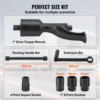

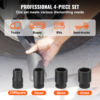
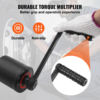
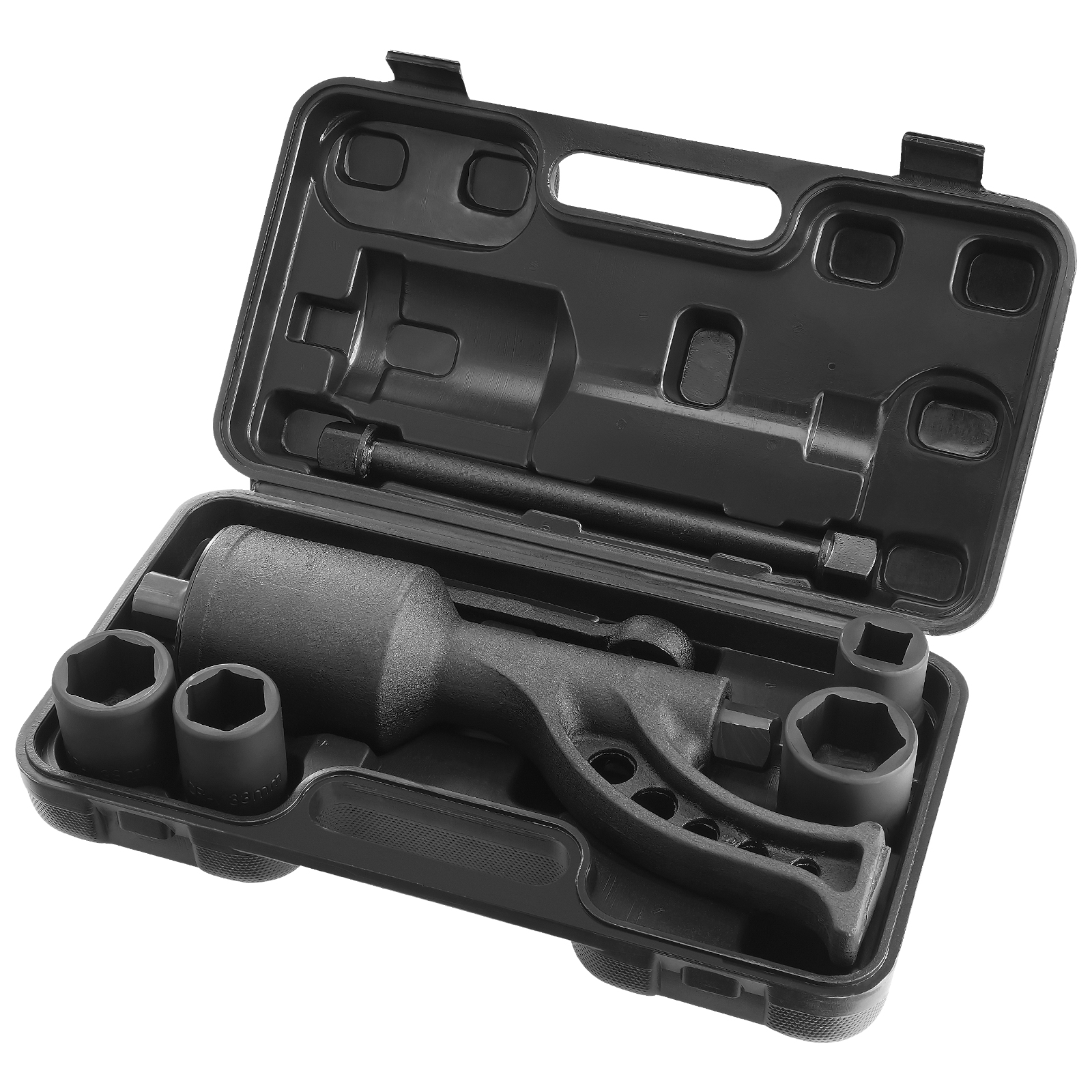


Torque Multipliers for Heavy-Duty Lug Nuts
Torque Multipliers are manual gear-driven tools for loosening and tightening high-torque lug nuts on heavy vehicles and equipment. Choose a 1:58 or 1:64 ratio and a 4- or 8-socket set based on the vehicle, fastener size, and torque range required for the job.
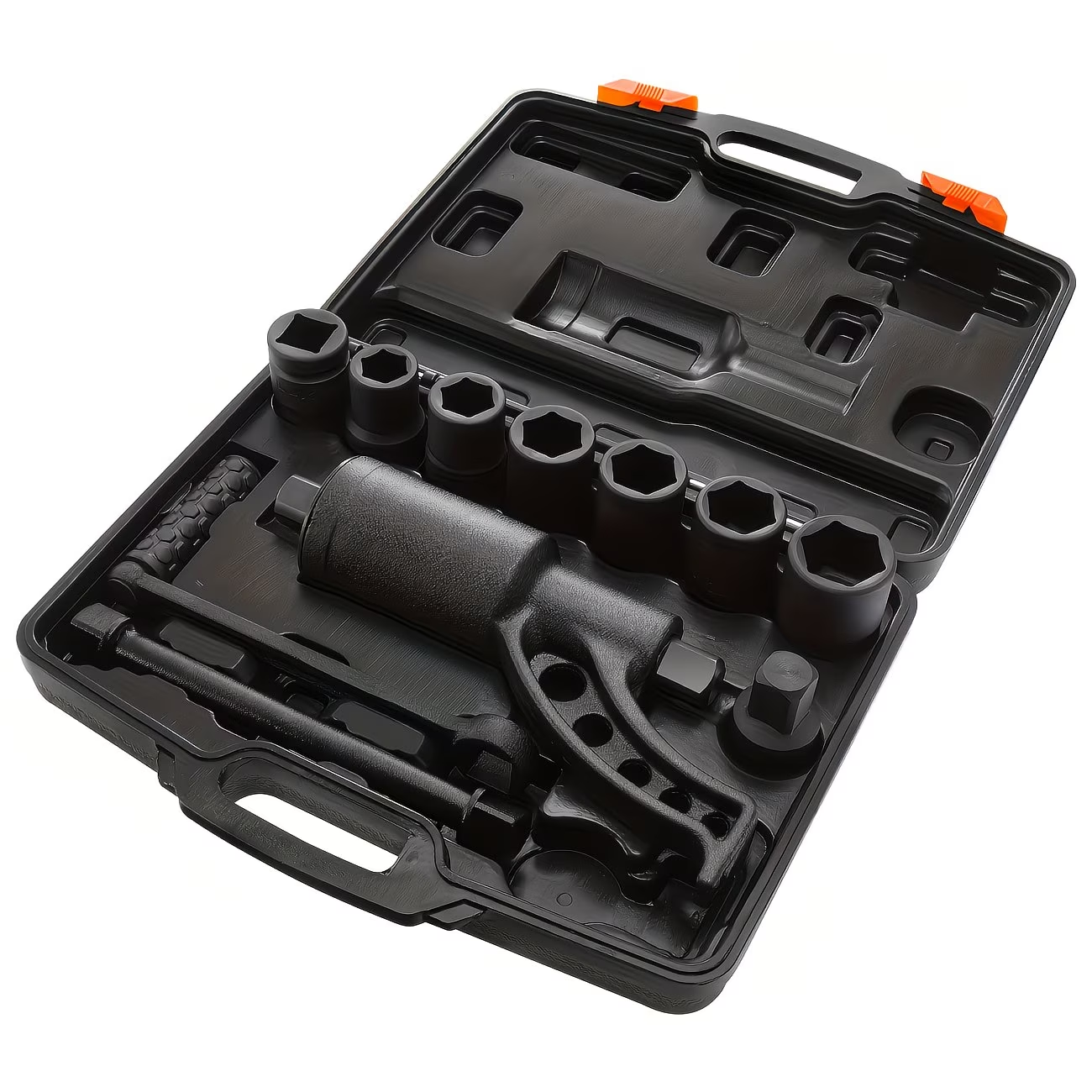
Manual Torque Multipliers for Roadside and Workshop Use
These manual torque multipliers use a gear-reduction system to increase the turning force applied through the rocker arm. They are designed for working with wheel fasteners and other high-torque applications where a standard hand wrench may not provide enough leverage.
The product is available in four configurations: 1:58 with 4 sockets, 1:58 with 8 sockets, 1:64 with 4 sockets, and 1:64 with 8 sockets. Review the options shown above before adding a set to your cart.
Choose Your Torque Multiplier Set
| Gear Ratio | Maximum Output Listed | Socket Options | Use Case |
|---|---|---|---|
| 1:58 | 4,800 N·m | 4 sockets or 8 sockets | Manual high-torque fastening and removal tasks within the listed range. |
| 1:64 | 6,800 N·m | 4 sockets or 8 sockets | Applications that require the higher listed multiplication range. |
Each ratio is a separate product configuration. The 1:58 models are listed at up to 4,800 N·m, while the 1:64 models are listed at up to 6,800 N·m. Select the ratio and socket-count option that matches your work requirements.
Key Features
- Manual gear-driven operation: Uses a rocker arm and geared multiplier mechanism to increase turning force.
- Two ratio options: Choose 1:58 or 1:64 based on the listed torque range needed.
- 4- or 8-socket configurations: Select the socket-set size that best fits the fasteners you work with.
- Alloy-steel construction: The supplier and instruction manual describe an alloy-steel tool construction.
- Spray-coated surface: The supplier lists a spray coating surface treatment.
- Manual operation: Works without an electric, cordless, pneumatic, or battery-powered drive system.
- Portable storage case: The set is supplied with a carrying case for storing the multiplier and included components.
- Rocker arm and extension bar: The manual identifies a rocker arm and long pole as operating components.
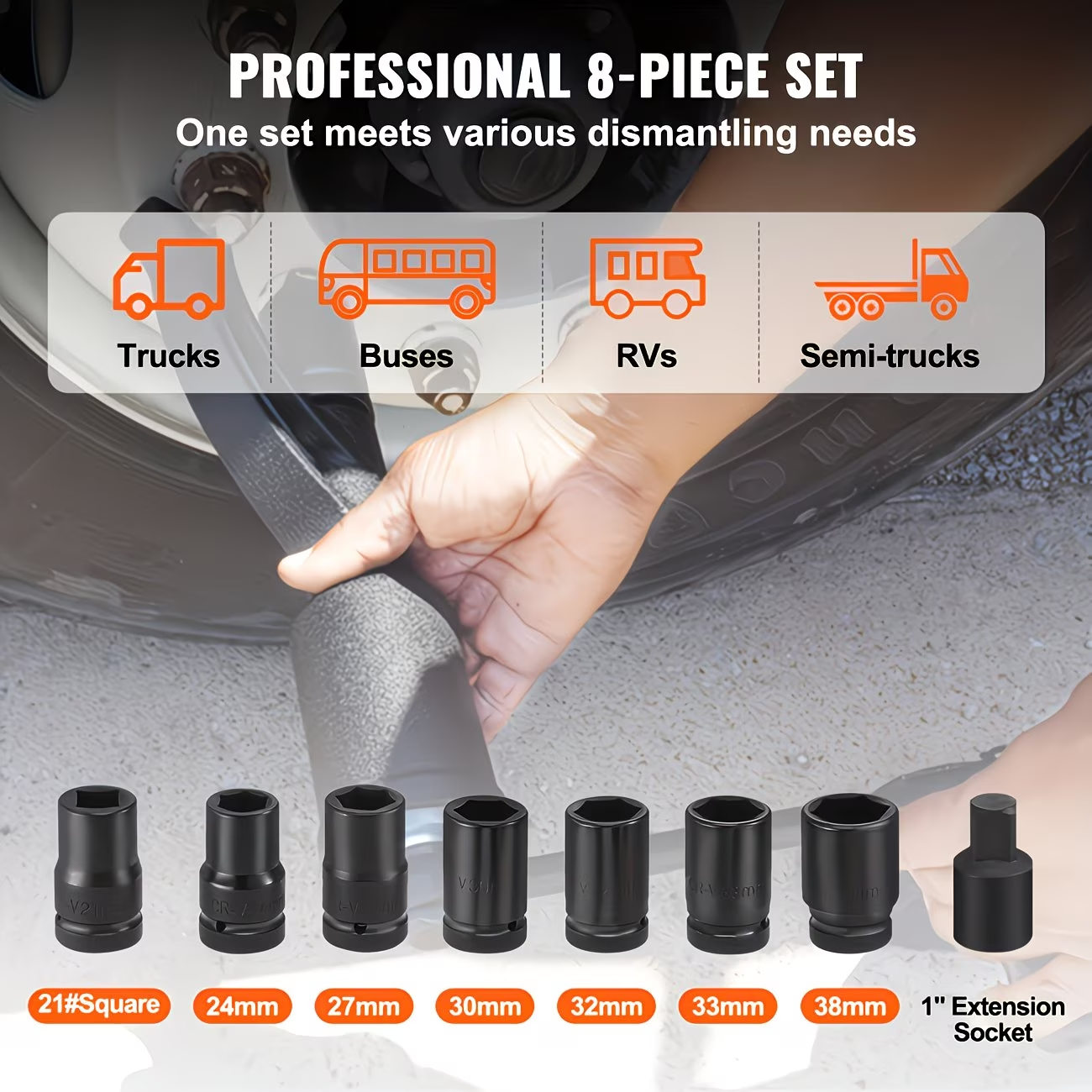
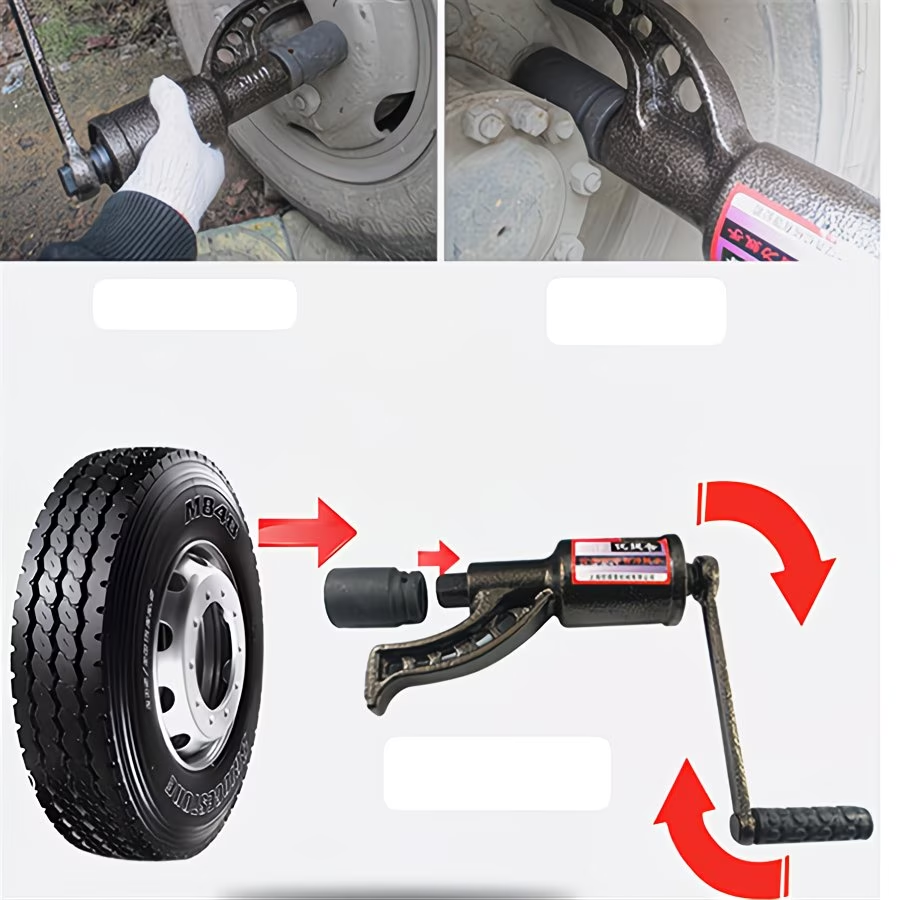
How Do Torque Multipliers Work?
A torque multiplier uses internal gearing to multiply the turning force applied at the input handle. Fit a compatible socket to the output end, place the socket on the lug nut or fastener, brace the reaction point as directed in the manual, and turn the rocker arm in the correct direction.
After the fastener is loosened, use the long pole or another suitable tool to remove it efficiently. When tightening, start the fastener by hand or with the long pole, then use the multiplier for final mechanical tightening within the tool and vehicle manufacturer’s specifications.
Technical Specifications
| Specification | Details |
|---|---|
| Product Type | Manual torque multiplier set |
| Gear Ratio Options | 1:58 and 1:64 |
| Maximum Output Listed | 1:58: 4,800 N·m; 1:64: 6,800 N·m |
| Socket Set Options | 4 sockets or 8 sockets, depending on selected configuration |
| Material | Alloy steel |
| Surface Treatment | Spray coating |
| Power Source | Manual operation |
| Storage | Carrying case included with the set |
When to Use Manual Torque Multipliers
Manual torque multipliers can be useful for roadside tire service, fleet maintenance, truck and trailer wheel work, agricultural equipment, RV wheel service, and other high-torque fastening tasks. Confirm the socket size, gear ratio, vehicle fastener requirements, and working clearance before starting the job.
They are not a replacement for a calibrated torque wrench when a vehicle or equipment manufacturer specifies a final tightening value. Follow the applicable service manual for final torque requirements.
Frequently Asked Questions
What are torque multipliers?
Torque multipliers are manual gear-driven tools that increase the turning force applied to a socket or fastener. They are commonly used for high-torque lug nuts and other fasteners that are difficult to loosen or tighten with a standard hand wrench.
Do torque multipliers work?
Yes. Their internal gears increase the output turning force relative to the force applied at the handle. Correct socket selection, proper bracing, turning direction, and following the tool instructions are important for safe operation.
How do torque multipliers work?
Attach the socket to the output end, position it on the fastener, brace the reaction point as instructed, and turn the rocker arm in the proper direction. The internal gear ratio multiplies the force applied at the handle.
What is the maximum torque output of these torque multipliers?
The listed maximum output depends on the selected ratio. The 1:58 configurations are listed at up to 4,800 N·m, and the 1:64 configurations are listed at up to 6,800 N·m.
Can I use a torque multiplier to tighten lug nuts?
It can be used for mechanical tightening within the tool instructions. For final tightening, follow the vehicle or equipment manufacturer’s specified torque value and use the appropriate calibrated tool when required.
Do torque multipliers need to be calibrated?
A torque multiplier is not automatically a calibrated final-torque tool. If the application requires an exact final torque value, follow the vehicle or equipment manufacturer’s specification and use a calibrated torque wrench or other appropriate method.
Are torque multipliers dangerous?
They can cause injury if used incorrectly. Wear safety glasses and gloves, keep hands clear of moving parts and the tool’s working area, use the correct turning direction, and do not use the tool as a hammer.
Can I use this set on an RV or heavy vehicle?
Manual torque multipliers may be suitable for high-torque wheel fasteners when the selected sockets and ratio match the vehicle’s requirements. Check the fastener size, required final torque, clearance, and service instructions before use.
Choose the Right Torque Multiplier Option
Review the gear-ratio and socket-count options above before adding the product to your cart. Choose 1:58 or 1:64 based on the listed torque range, then select the 4- or 8-socket configuration that fits your expected fastener sizes.
Related Mechanic Tools
Useful Resources
- Review the OSHA personal protective equipment guidance before performing maintenance work that requires eye and hand protection.